The Richest Game in Football
## The Price of Promotion: Why Football’s Richest Game is Hidden in the Second Tier Modern football is undergoing a profound identity crisis. For a sport born in the industrial heartlands of England, built on the community values of the working class, the beautiful game feels increasingly detached from its roots. Today, the headlines are dominated by sovereign wealth funds, multi-club ownership models, and astronomical broadcasting rights. This hyper-commercialization is heavily evident during the FIFA World Cup currently ongoing in the United States, Canada, and Mexico. The tournament, expanded to a massive forty-eight teams, feels to many critics like the ultimate corporate operation rather than a true celebration of sport. As ticket prices soar and local fanbases feel pushed out, a collective melancholy grows that football has permanently abandoned its "working class on grass" heritage in pursuit of absolute monetization. Yet, if you were to ask a casual observer to name the single most lucrative match in the global game amidst this sea of cash, they would almost certainly point to the grandest showpieces. They would guess the UEFA Champions League final, where the elite of Europe cross swords under stadium lights, or perhaps the final of the World Cup itself. They would be entirely wrong. The richest game in football does not feature the traditional giants of the continental stage. It takes place in late May beneath the sweeping arch of Wembley Stadium. It is the English Football League Championship Play-Off Final, a second-tier showdown where the stakes transcend a mere silver trophy, operating instead as a brutal, winner-take-all gateway to generational wealth. 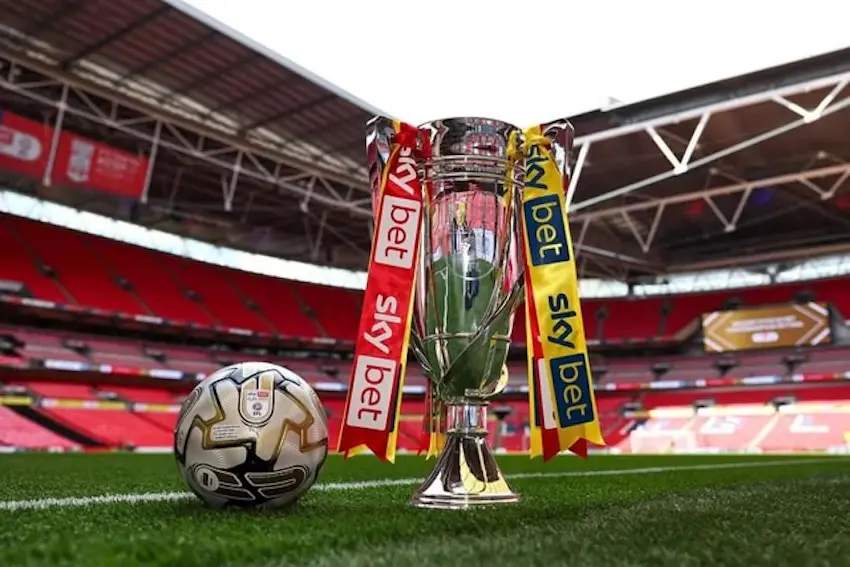## The Ultimate Financial Windfall To understand why a second-division match eclipses Europe’s grandest stage financially, you must look at what the winner actually inherits. According to sports business data from financial experts, victory in the Championship Play-Off Final guarantees an immediate revenue increase of at least £140 million to £170 million. If the promoted club manages to survive just their first season in the top flight, that windfall automatically balloons past £300 million. Compare this to the UEFA Champions League final. Winning Europe's ultimate club competition secures a direct prize pot of roughly £18 million to £22 million, with the total cumulative tournament revenue topping out around £100 million for the entire campaign. The Champions League rewards an already wealthy elite with a lucrative bonus. The Championship Play-Off Final fundamentally converts a modest football club into a global corporate enterprise overnight. The vast disparity boils down to the staggering media machine of the English Premier League. The moment a team secures promotion, they are thrust into the gold-standard domestic and international television broadcast distributions. They receive equal shares of global television rights, massive facility fees for live-broadcasted matches, and commercial revenues that dwarf anything available in the second division. ## Parachute Payments: The Safety Net and the Great Divide The financial reward of promotion is heavily back-ended by a highly debated mechanism known as parachute payments. When a club is promoted to the Premier League, they enter an environment where wage bills and transfer fees are astronomically higher. To prevent these clubs from suffering total financial collapse should they be relegated back down, the Premier League provides a multi-year financial safety net. If a newly promoted team goes straight back down after one season, they are eligible for two years of parachute payments. If they survive longer before dropping, they receive three years of funding. These packages are distributed sequentially: - **Year 1:** 55% of the equal share of Premier League broadcast revenue. - **Year 2:** 45% of that share. - **Year 3:** 20% of that share. This translates to a guaranteed soft-landing cushion of more than £40 million in the first year back in the Championship. While parachute payments were genuinely designed to bridge the terrifying financial chasm between the Premier League and the EFL, they have inadvertently engineered a profound civil war within the Championship itself. Instead of just leveling the playing field for relegated sides, these payments create a massive financial disparity among the second-tier clubs. Teams armed with tens of millions of pounds in top-flight subsidies can afford to maintain Premier League-level squads and wages. Meanwhile, organic Championship clubs operating without these safety nets are forced to survive on a fraction of the budget. This has created a "yo-yo" effect, where a select group of heavily subsidized clubs continually bounce between the top two divisions, suffocating the promotion dreams of smaller, traditional teams. ## The 2026 Campaign: An Unprecedented Wembley Drama The sheer desperation for this financial promised land regularly cooks up intense drama, but the Championship Play-Off Final between Hull City and Middlesbrough will go down as arguably the most controversial in the history of the competition. To fully understand the gravity of the match, one must look at the immense controversy that unfolded off the pitch following the semi-final legs. On the field, Southampton had seemingly done the hard work. After a tense 0–0 draw in the first leg at the Riverside, Southampton dug deep at St Mary’s, defeating Middlesbrough 2–1 after extra time thanks to a 116th-minute cross from Shea Charles that snuck into the far post. The Saints celebrated a hard-fought ticket to Wembley. Then, the administrative floor collapsed. In the days following the semi-final, a massive independent EFL disciplinary commission rocked English football. Southampton were caught up in an explosive, high-stakes scouting scandal. For the general public reading the headlines, the situation boiled down to a severe breach of sportsmanship and regulations regarding corporate espionage. Southampton ultimately admitted to multiple counts of unauthorized, covert filming of opponents' private training sessions, essentially spying on the tactical preparations of their rivals to gain an unfair sporting advantage. The EFL’s hammer fell swiftly and without mercy. Southampton were completely expelled from the play-offs. They were hit with an additional four-point deduction carried over into the next season. Middlesbrough, despite losing the actual semi-final match on aggregate, were dramatically reinstated and handed a direct pass straight to the Wembley showpiece. 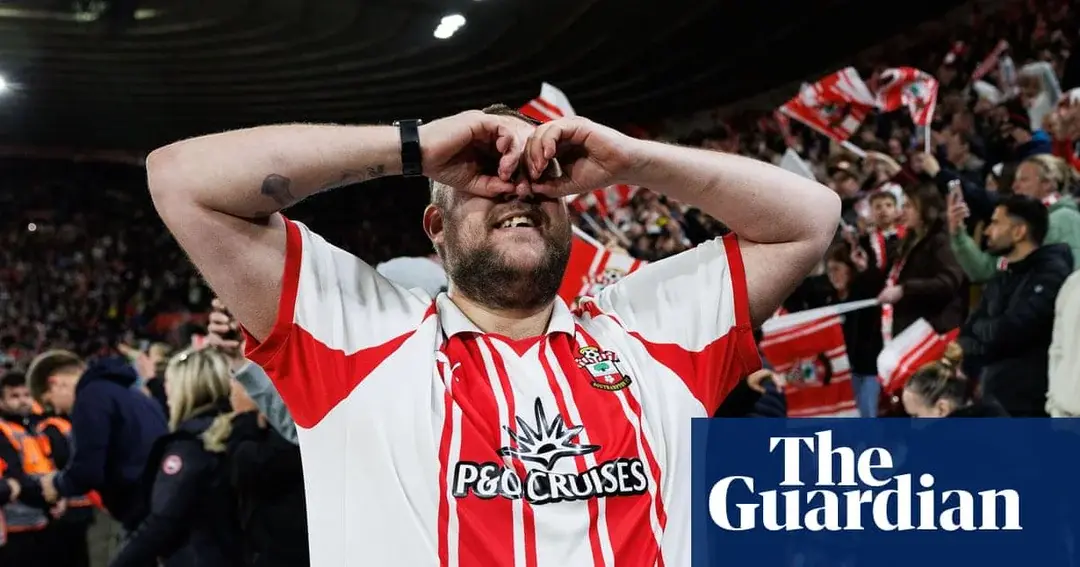 ## What did Southampton actually do? It was the morning of Thursday, 7 May. Middlesbrough were at their Rockliffe Park training base preparing for the game against Southampton 48 hours later. The spy, Southampton analyst intern William Salt, is said to have parked at the golf club, then walked a couple of hundred yards down a road which leads to a raised area of ground. Sources told the BBC that the accused simply stood pointing his mobile at the training session, while wearing in-ear headphones. Middlesbrough staff believe he may have been live-streaming the session via a video call. A member of Middlesbrough's staff approached, say BBC sources, but the person would not identify himself. Then, he quickly deleted some content off his phone before running off into the golf club.He jogged into the toilets, changed his clothes and hurriedly left the site. Middlesbrough's photographer took photos and matched him to a photo on the Southampton website. One of those pictures was subsequently made public. Boro were furious and quickly reported it to the EFL. The EFL charged Southampton with breaking two regulations. 1. **EFL Regulation 3.4**, which requires clubs to act towards each other with the utmost good faith; and 2. **EFL Regulation 127**, which prohibits any club from observing, or attempting to observe, another club's training session within 72 hours of a scheduled match between the two clubs.  ## The Final The final itself became a boiling pot of narrative tension. Hull City, seeking to end a nearly ten-year absence from the top flight, faced a Middlesbrough squad that standard football logic dictated should not even be there. At the beginning of the season, expectations for Hull City were incredibly low. Financial restrictions and a threadbare squad meant that most pundits and fans viewed them as a team that would inevitably be stuck in a grueling battle for relegation. In a cagey, nerve-shredding match defined by tactical caution and overwhelming anxiety, it was Hull City who ultimately claimed the ultimate prize. A dramatic 95th-minute stoppage-time winner from veteran striker Oli McBurnie sealed a 1–0 victory for the Tigers, sending Hull into the Premier League and leaving Middlesbrough to wonder what might have been. The sheer absurdity of their journey from predicted relegation candidates to top-flight promotion was perfectly captured during the victory parade by their head coach, Sergej Jakirović. Addressing thousands of roaring fans from the city center balcony, he delivered a now-infamous statement that perfectly iced the fairytale: "I have to say sorry. I was brought here with one job to do: keep Hull City in the Championship. I failed, because we are going to the Premier League."  ## Conclusion The Championship Play-Off Final remains a fascinating, terrifying paradox in modern sport. It is an occasion that perfectly encapsulates how deeply ingrained money has become in football's DNA. The eye-watering sums on the line drive clubs to systemic desperation, occasionally birthing the exact kind of rule-breaking and administrative chaos seen in the Southampton scandal. Yet, despite the corporate billions dominating the landscape, the match somehow preserves a flickering remnant of the game's old soul. For the thousands of working-class fans who pack the stands at Wembley, the tears shed at the final whistle are not for broadcasting portfolios or parachute payment structures. They are for the romantic, lifelong dream of seeing their local club test themselves against the absolute best. It is a game where capitalism entirely dictates the stakes, but pure sporting passion still fuels the theater. Now, let us go back to the World Cup.
Posted by @radek